
The 'Contact-Pressure' Calibration: Optimizing Bit-to-Plate Angularity for Reduction of Thermal Friction
Thermal friction is the silent killer of nail plate health. Master the geometric alignment required to eliminate heat spikes and maintain integrity on even the most sensitive client beds.
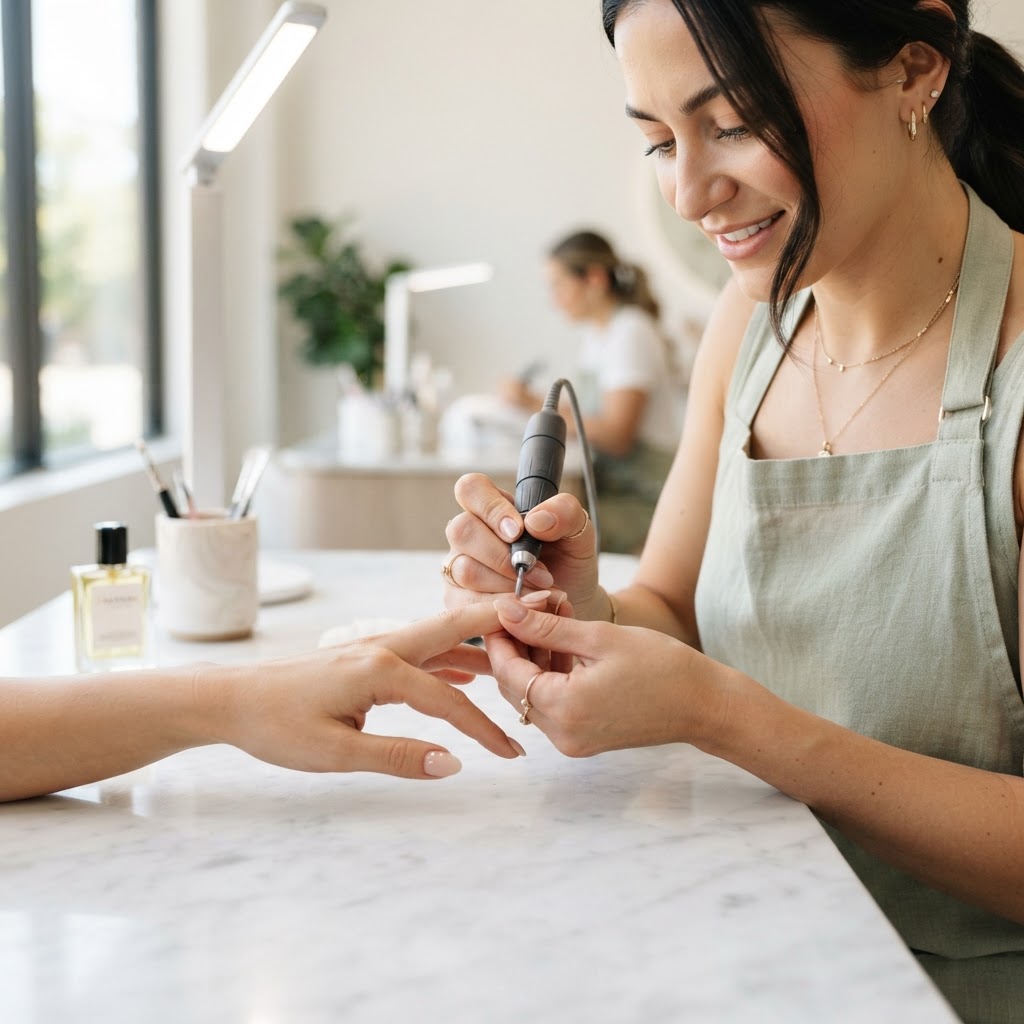
Understanding the Thermal Threshold
Every nail technician has encountered the 'heat spike' panic. While often attributed to curing, a significant portion of thermal sensitivity is induced during the prep and debulking stages through improper e-file technique. Thermal friction is a product of three variables: RPM, bit grit, and—most importantly—the contact angle between the bit and the nail plate. When the bit-to-plate contact surface area is too wide, friction increases exponentially, leading to micro-cracking and cuticle inflammation.
The Geometry of Heat Reduction
The goal of efficient e-filing is maximum product removal with minimum energy transfer. To achieve this, you must treat your handpiece not as a grinder, but as a scalpel. The 'Contact-Pressure' calibration relies on a 15-degree engagement angle. When your bit is positioned at an angle greater than 20 degrees, the edge of the bit bites into the keratin, creating drag. When the angle is less than 5 degrees, you are essentially 'polishing' the surface, which generates more heat through friction than through material removal.
Join the newsletter
Get fresh nail tutorials, trends, and business tips straight to your inbox.
Practical Calibration Steps
Troubleshooting Sensitivity
If a client is prone to heat spikes, check your bit material. Carbide bits generally run cooler than diamond bits because the flutes are designed to scoop and eject debris, whereas diamond bits grind material into a fine dust that acts as an insulator, trapping heat against the plate. For sensitive clients, switch to a ceramic bit with 'cross-cut' fluting to facilitate faster debris clearance.
By systematizing your angularity, you not only protect the client's nail plate from 'tunneling' and thinning but also extend the longevity of your e-file bits and handpiece motor. Consistency in your geometry creates a frictionless workflow, reducing physical fatigue and ensuring a painless service experience.
Join the newsletter
Get fresh nail tutorials, trends, and business tips straight to your inbox.