
The 'Volumetric Control' System: Preventing Product Flooding in High-Viscosity Builder Gels
Master the physical mechanics of builder gel distribution to eliminate cuticle flooding and reduce manual refinement time by 40%.
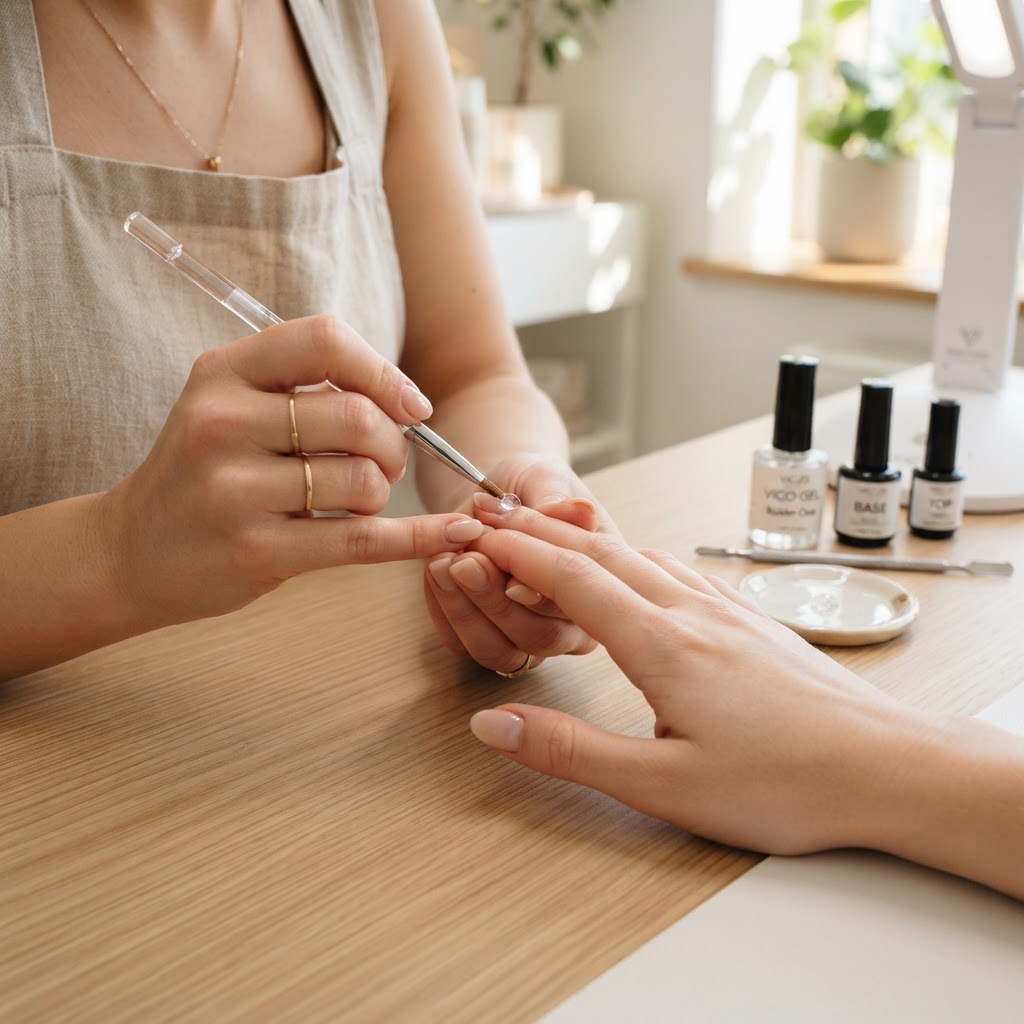
The Architecture of the Bead
One of the most persistent hurdles in high-speed, high-quality nail artistry is the 'flood.' When builder gel migrates into the lateral folds or the proximal nail fold, it destroys the crisp aesthetic of the cuticle area and compromises the structural integrity of the application. The 'Volumetric Control' system moves away from guessing bead sizes and toward a disciplined, geometry-based approach to product placement.
The 70/30 Distribution Rule
Most technicians struggle because they place the bulk of their product in the center of the nail plate, relying on gravity and manipulation to push it toward the perimeter. This is a recipe for flooding. Instead, adopt the 70/30 rule:
* 70% of your product volume should remain in the 'Apex Zone' (the structural load-bearing area located between the first and second quadrants).
* 30% of your product volume is dedicated to the 'Flow Zone' (the perimeter).
By keeping the mass of the product anchored away from the cuticle, you use the viscosity of the gel as a dam rather than a flood-prone liquid.
Precision Tooling: The Micro-Brush Technique
Join the newsletter
Get fresh nail tutorials, trends, and business tips straight to your inbox.
Stop using the bottle brush for the cuticle-adjacent zone. High-viscosity gels are designed to be moved, not painted.
Managing Polymerization and Heat Spikes
When working with high-viscosity builder gels, the tendency is to apply a thick layer to 'save time.' This leads to excessive heat spikes and potential curing issues.
* The Bridge Method: If you are building extreme length, do not attempt to reach your final structural thickness in one go. Apply a thin 'scaffolding' layer first. Cure for 30 seconds. This creates a base that prevents the final, larger volume of product from sliding.
* Refinement Efficiency: If you control your volume correctly during the application phase, your electric file refinement should be limited to the cuticle area only. If you find yourself needing to file the surface of the nail heavily, you have applied too much product. Remember: The goal is to build the nail, not to build and then remove.
Troubleshooting Flow Issues
If your product is consistently flooding, check these three environmental factors:
* Temperature: If your workspace is too warm, high-viscosity gel will lose its 'thixotropic' properties (the ability to stay put when not being agitated) and behave like a liquid. Keep your products in a stable, cool environment.
* Brush Pressure: Are you pressing too hard? The brush should glide on the surface of the gel, not touch the nail plate. If you feel the bristles hitting the nail, you are creating 'drag' which pushes the product outward toward the side walls.
* Product Age: Older gels can lose their viscosity profile. If a gel feels 'runny' despite being a known thick-viscosity brand, it may be time to cycle in fresh inventory.
By shifting your focus from 'painting' the gel to 'mapping the volume,' you move from a reactive state—trying to clean up messes—to a proactive state where the product is essentially self-correcting.
Join the newsletter
Get fresh nail tutorials, trends, and business tips straight to your inbox.
