
The 'Vector-Flow' Blending Method: Mastering Seamless Ombré Transitions in Viscous Gels
Learn the mechanical principles behind air-free, streak-less color gradients using high-viscosity gels. This technical guide covers brush-angle manipulation and polymerization-timing to elevate your artistry.
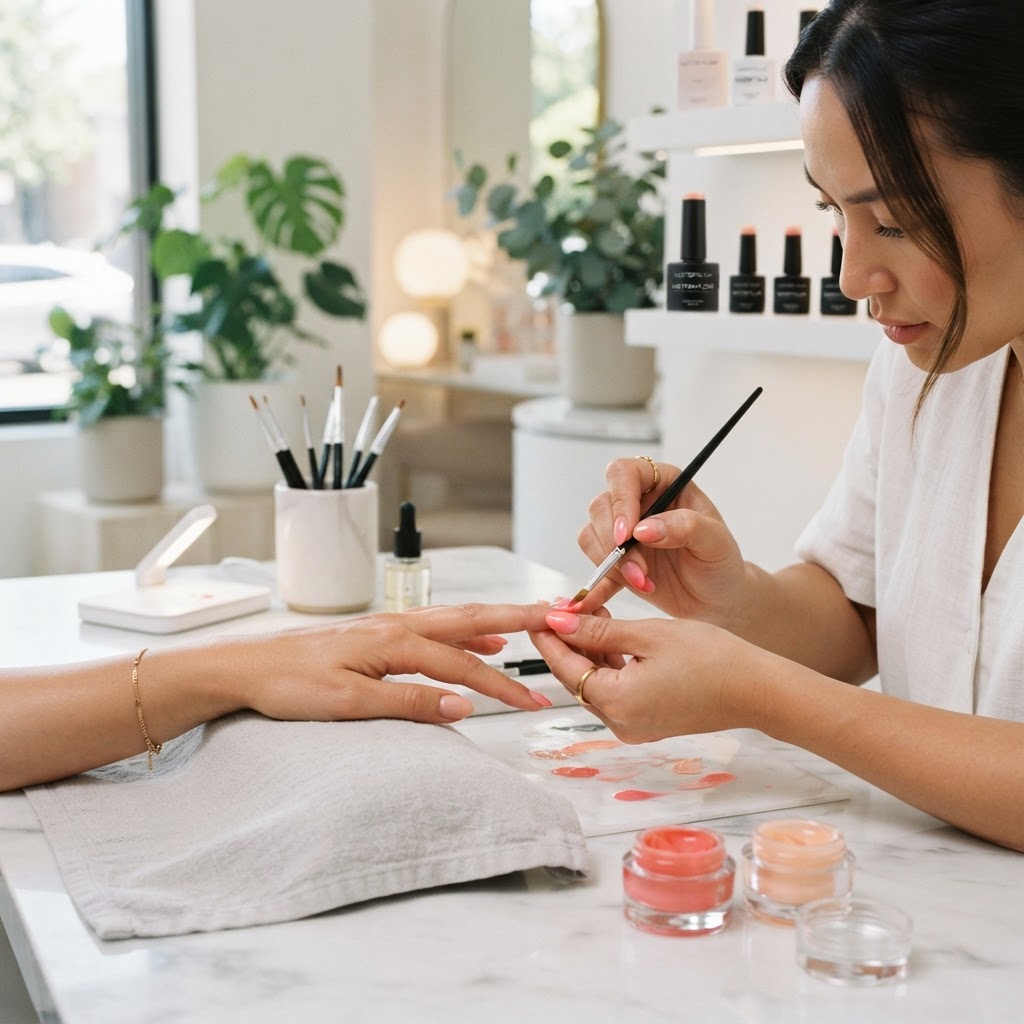
The Architecture of the Gradient
Creating a seamless transition between two colors on a nail bed is less about artistic 'touch' and more about controlling the physics of viscosity. Many artists struggle with 'muddy' blends or visible brush tracks because they treat the blending process as a surface-level action rather than a volumetric redistribution of gel. The 'Vector-Flow' method requires a shift in how you hold your brush and how you calculate the saturation of pigment.
The Mechanics of Vector-Flow
The Vector-Flow method relies on three variables: the angle of the bristle-to-nail contact, the frequency of the oscillation stroke, and the thermal-viscosity threshold of the gel.
Join the newsletter
Get fresh nail tutorials, trends, and business tips straight to your inbox.
Controlling Polymerization Kinetics
Gradient work is often ruined by premature thickening. High-viscosity builder gels or heavily pigmented color gels begin to 'set' the moment they are exposed to ambient light or excessive friction. To maintain a fluid state during the blend:
* Work in 30-Second Cycles: Never attempt a full-hand blend at once. Use a flash-cure lamp at a lower intensity (if adjustable) or hover the hand over the curing unit to keep the product fluid but not fully set.
* The Thin-Film Prime: Ensure your base layer is perfectly leveled. Any ridges in the base layer act as 'friction traps,' catching the brush and causing skips in your color transition.
Essential Tools for Precision
Not all brushes are created equal for this task. You require a synthetic, high-memory bristle brush with a flat-square or rounded-edge profile.
* Why synthetic? Natural hair tends to absorb pigments, making it difficult to fully clean between colors. Synthetic fibers offer a 'non-stick' surface that allows the gel to slide rather than adhere to the tool.
* The Cleaning Protocol: During the Vector-Flow process, clean your brush with a lint-free wipe saturated in 99% IPA (Isopropyl Alcohol) every two passes. A clean brush is the only way to maintain the purity of the pigment transition.
Troubleshooting Common Failures
* Surface Rippling: If you see ripples, you are applying too much pressure. The brush should be 'floating' on the surface of the gel, not pressing into the nail plate.
* The 'Muddy' Mid-Section: This usually occurs because of over-mixing. Remember that you are creating a transition, not a new color. Stop the blending motion as soon as the two colors touch and create a soft bridge. Let gravity and the gel's self-leveling properties do the final 10% of the work.
By systematizing your brush motion and respecting the polymerization kinetics of your products, you can reduce your service time by 15% and increase the aesthetic 'cleanliness' of your finished sets. Mastery of this technique differentiates a 'painted' gradient from a professional-grade color transition.
Join the newsletter
Get fresh nail tutorials, trends, and business tips straight to your inbox.
