
The 'Thermal-Conductivity' Threshold: Optimizing Lamp-to-Plate Distance for Reduced Exothermic Spiking
Learn the physics of polymer chain reactions and how specific lamp positioning can eliminate painful heat spikes during gel curing while maintaining structural integrity.
The Science of the Spike
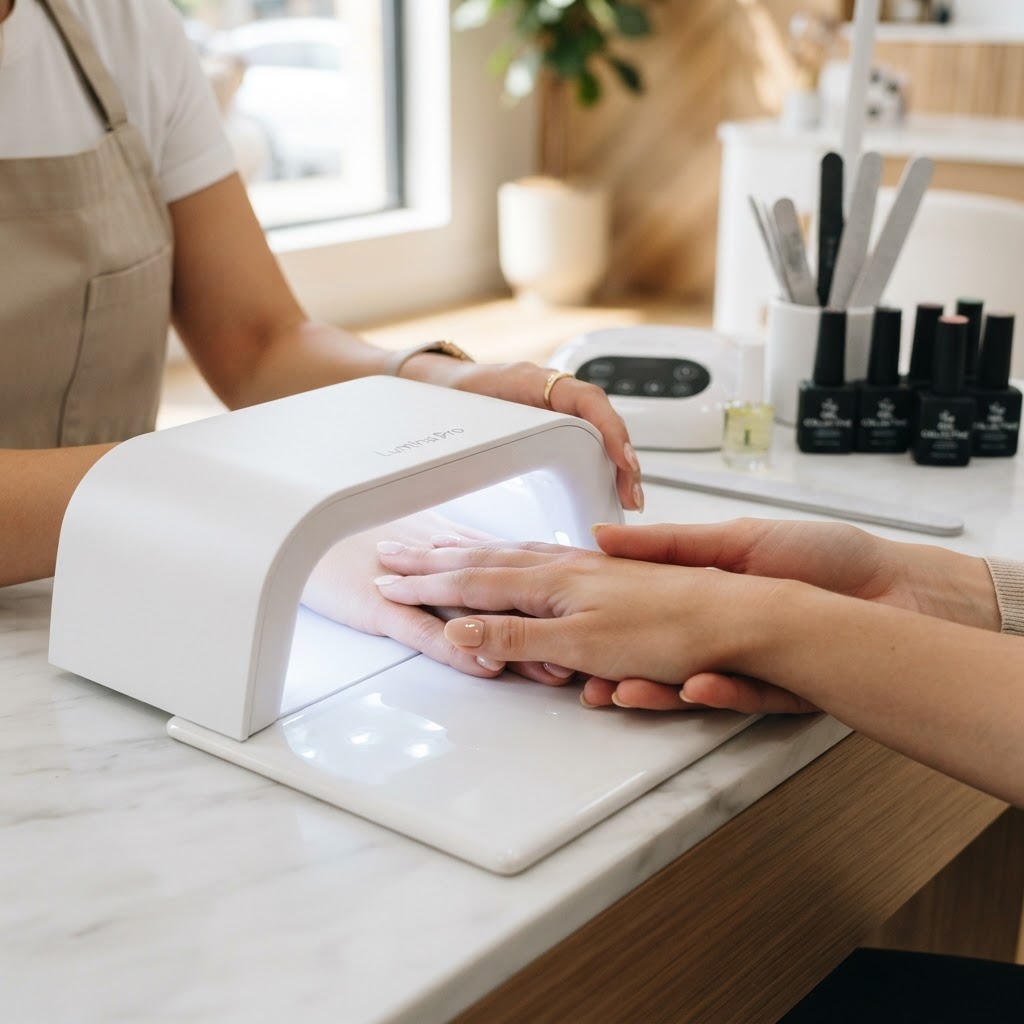
Every nail technician has witnessed the flinch: the sudden, involuntary jerk of a client’s hand when a base gel hits the lamp. This phenomenon, known as an exothermic reaction, occurs when photo-initiators in the gel polymerize too rapidly, releasing kinetic energy in the form of heat. While we often blame the product, the real culprit is frequently the 'Thermal-Conductivity' threshold—a failure to manage the intensity of the light hitting the nail plate during the critical first five seconds of curing.
The Polymerization Feedback Loop
Polymerization is an exothermic process. As the oligomers bond to form a solid matrix, they release energy. If the curing light is too intense or too close to the nail plate at the onset of the reaction, the polymer chains link at an accelerated rate, causing the temperature to spike faster than the nail bed can dissipate the heat. This is not just a comfort issue; a violent exothermic spike can lead to micro-fractures in the gel matrix, resulting in premature lifting and brittleness.
The 'Low-Intensity' Start Protocol
Join the newsletter
Get fresh nail tutorials, trends, and business tips straight to your inbox.
To mitigate this, you must manipulate the photon density at the start of the cure. Instead of placing the hand directly under the lamp's light-emitter array, follow this three-stage calibration:
Calibration for Specific Nail Types
Not all nail plates react the same way. The 'Thermal-Conductivity' threshold varies based on the plate's density and moisture content. For clients with thin or damaged nails, the heat transfer happens much faster because there is less 'thermal mass' to absorb the energy. For these clients, the peripheral placement phase should be extended to 8 seconds to prevent the heat from reaching the nerve endings in the nail bed.
E-File and Pre-Cure Hygiene
Exothermic sensitivity is also compounded by the surface area of the nail plate. If you have overly thinned the natural nail during the prep phase, you have reduced the insulation between the gel and the nail bed's vascular system. Ensure your e-file bit-grit is matched to the plate porosity. Using an unnecessarily coarse bit creates deeper grooves, increasing the surface area for the gel to penetrate and, consequently, increasing the intensity of the heat felt by the client.
Operational Benefits
By standardizing this protocol, you improve two key metrics: client retention and product longevity. Clients who fear the 'burn' often hesitate to book thicker, high-durability enhancements. When you demonstrate that your technique eliminates this pain point, you build trust and can confidently offer more robust, high-performance nail services that last longer without the risk of trauma-induced lifting.
Join the newsletter
Get fresh nail tutorials, trends, and business tips straight to your inbox.