
The 'Tension-Release' Filleting Technique: Mitigating Premature Lateral Lifting in Curved Nail Plates
Master the art of sidewall filleting to eliminate lateral lifting caused by structural tension and nail plate curvature.
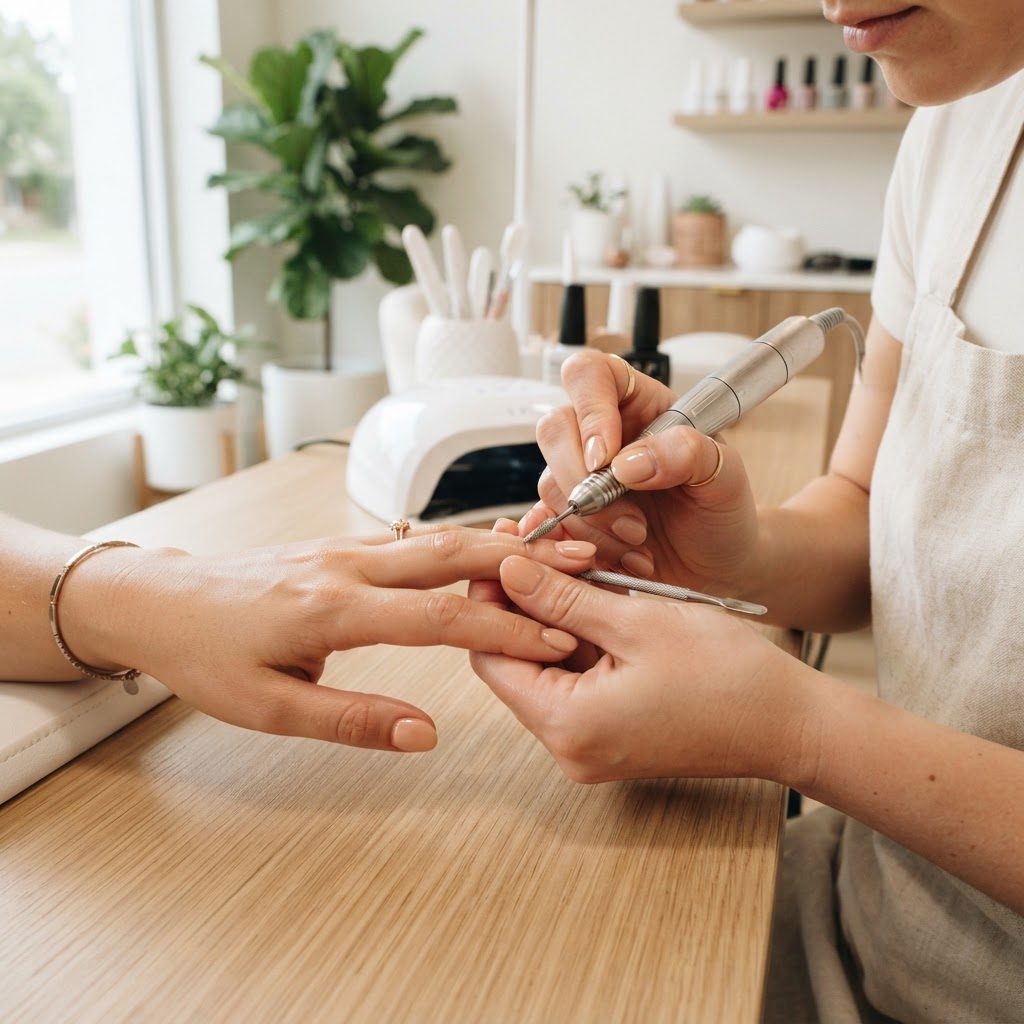
The Hidden Cause of Lateral Lifting
Many nail technicians blame product formulation or prep work when a client returns with lifting along the lateral sidewalls. While proper dehydration and priming are foundational, a frequent, overlooked culprit is structural tension. When you apply product to a nail with a naturally deep C-curve, the rigid nature of hard gel or acrylic often clashes with the nail's tendency to flex, creating a 'pinch' at the stress points. The 'Tension-Release' Filleting Technique is designed to bridge this gap, ensuring the bond remains intact even under mechanical stress.
Identifying High-Tension Architecture
Before applying your base, inspect the client's nail plate for the following markers:
* High Hyponychium Migration: Does the skin creep up the side of the nail? This creates a buffer that often interferes with a clean seal.
* Excessive C-Curve Depth: A deeper curve creates a sharper angle at the sidewall, which is where product thickness tends to pool and later crack due to tension.
* Flexibility Index: Does the natural nail plate have high moisture content? High flexibility means the nail will move more than the product, leading to micro-fractures at the perimeter.
Join the newsletter
Get fresh nail tutorials, trends, and business tips straight to your inbox.
The 'Tension-Release' Filleting Protocol
This method involves creating a transitional 'fillet'—a concave slope of product—that prevents hard edges and minimizes stress accumulation at the lateral walls.
Testing Structural Integrity
To ensure your filleting has successfully mitigated tension, perform a 'flex-test' before your final topcoat. Apply gentle pressure to the tip of the extension. If you see white stress marks forming at the sidewalls, the product is too rigid or the filleting is too shallow. Thin the sidewall area further with a fine-grit diamond bit until the extension flexes with the nail rather than resisting it.
Maintaining the Seal
Finally, remember that the longevity of this technique depends on the client’s home care. Advise clients that oils are not just for cuticles—they are for the sidewalls. Daily use of high-quality cuticle oil hydrates the skin, preventing it from hardening and pulling against your 'filleted' edge. By combining this mechanical precision with proper hydration, you significantly reduce the cycle of re-booking repairs and build client trust through superior, long-lasting results.
Join the newsletter
Get fresh nail tutorials, trends, and business tips straight to your inbox.