
The 'Refraction-Gradient' Strategy: Mastering Multi-Layered Cat-Eye Artistry
Move beyond basic magnetic patterns by learning the physics of light refraction and depth layering to create bespoke, professional-grade dimensional nail art.
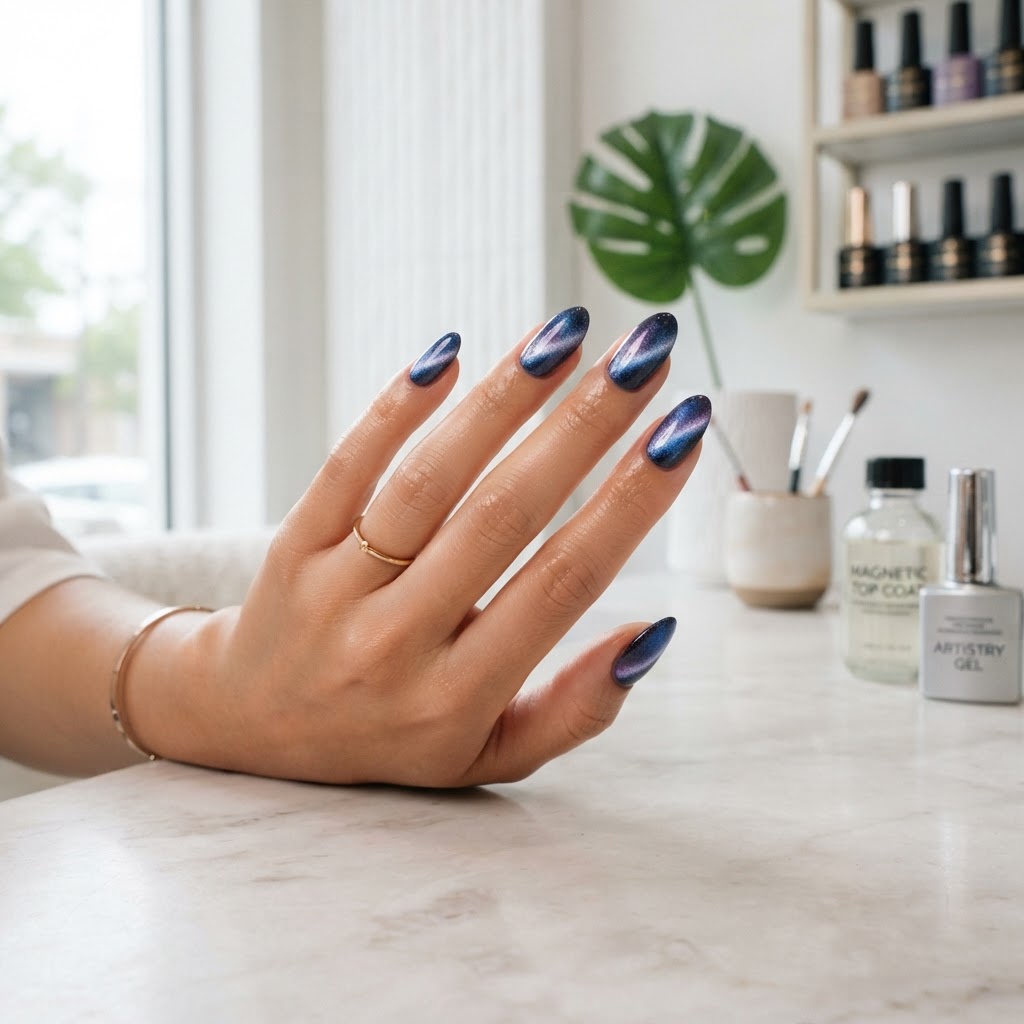
Understanding the Physics of Magnetic Pigments
Most nail artists view cat-eye polish as a single-step tool: apply, magnetize, cure. However, to achieve professional-grade depth, you must treat the magnetic particles as individual architectural elements within the gel matrix. The secret lies in the 'Refraction-Gradient' strategy, which leverages two distinct layers of magnetic manipulation to create an illusion of internal light suspension.
The Anatomy of the Magnetic Layer
Magnetic polishes contain iron oxide particles suspended in a viscous gel. When you introduce a neodymium magnet, these particles are pulled toward the field, creating a density contrast. The 'Refraction-Gradient' technique requires you to manipulate these particles not just horizontally across the nail, but vertically through the depth of the gel layer.
The Step-by-Step 'Refraction-Gradient' Workflow
To master this technique, you must work in two distinct stages using varying magnet strengths and angles.
Join the newsletter
Get fresh nail tutorials, trends, and business tips straight to your inbox.
Step 1: Establishing the Base Anchor
Apply a dark, non-magnetic base color (ideally black or deep navy) to create a high-contrast foundation. Once cured, apply a thin layer of your chosen magnetic gel. Do not magnetize yet. Instead, use a magnet to draw the particles toward the center of the nail, but hold the magnet for only two seconds. This creates a soft, diffused glow rather than a sharp line. Cure this layer partially (for 15 seconds) to 'freeze' the particles in a suspended, semi-organized state.
Step 2: The Secondary Refraction Layer
Apply a second, slightly sheerer layer of the same magnetic polish. This is where the magic happens. Use a circular magnet or a thin stylus magnet to manipulate the particles in the second layer at an opposing angle to the first. By crossing the magnetic fields, you create a complex, multi-dimensional pattern that looks like the shifting plates of a gemstone. The light will now refract off the bottom layer's soft glow while catching the crisp, sharp lines of the top layer.
Essential Professional Tips for Dimensional Artistry
Troubleshooting Common Failures
If your design looks 'muddy,' you are likely using too much product. The magnetic particles require space to move through the gel; if the gel layer is too thick, the particles get stuck in the viscosity of the product and cannot form sharp, defined shapes. Always prioritize two thin layers over one thick, heavy layer.
By controlling the suspension of these metallic elements, you move from basic manicure artistry to true structural design, ensuring your sets stand out with professional-grade depth that standard application methods simply cannot achieve.
Join the newsletter
Get fresh nail tutorials, trends, and business tips straight to your inbox.