
The 'Polymerization-Curvature' Audit: Managing Heat Spikes and Curing Geometry
Master the science behind polymerization to eliminate client discomfort and ensure structural longevity in high-viscosity gel enhancements.
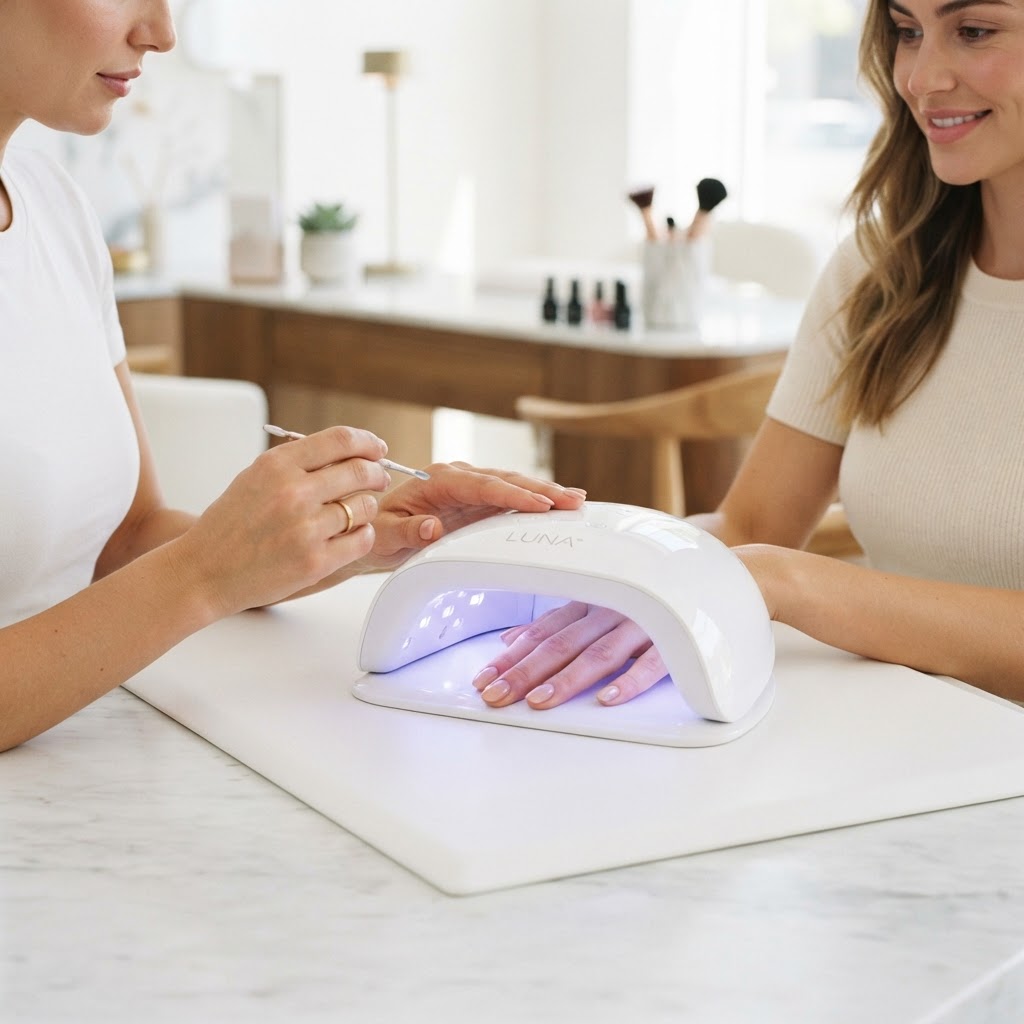
Understanding Polymerization Heat
The exothermic reaction that occurs during gel curing is often misunderstood as a simple 'burning' sensation. In reality, it is a rapid acceleration of molecular bonding. As the liquid monomer chains cross-link into a solid polymer network, they release energy in the form of heat. In high-viscosity systems or thick structural applications, this energy release is concentrated, often exceeding the heat-dissipation capacity of the natural nail plate.
The Geometry of Heat Spikes
Heat spikes are rarely about the intensity of your lamp alone; they are a byproduct of the thickness of your application and the proximity of the curing molecules. When you apply a thick apex bead, the bottom layer cures faster than the top, trapping heat against the nail bed. To mitigate this, consider the 'Step-Cure' method.
The Step-Cure Protocol
To neutralize the heat spike without sacrificing structural integrity, implement the following steps during your next enhancement service:
Join the newsletter
Get fresh nail tutorials, trends, and business tips straight to your inbox.
Optimizing Curing Geometry
Many technicians fail to consider the 'Curing Shadow.' This occurs when the angle of the LED diodes does not match the curvature of the nail, leaving the lateral sidewalls under-cured while the center is over-cured.
Assessing Lateral Wall Exposure
To ensure even polymerization:
* Check the Arch: Ensure the client’s hand is flat. If the fingers are curled, the sidewalls are shielded from direct light exposure.
* The Inverse Reflection Audit: If using a reflective-interior lamp, ensure your client is not 'blocking' the light with their thumb. The thumb should always be cured in a separate, dedicated cycle to ensure the nail plate is perpendicular to the light source.
Troubleshooting Product-Lamp Mismatch
If you consistently see soft-curing in the sidewalls despite proper lamp positioning, your product may be 'light-inhibited.' High-viscosity gels often require higher-intensity wavelengths. Audit your gel manufacturer’s specific wavelength requirements (typically 365nm to 405nm). Using a lamp that only outputs at 365nm for a product formulated for 405nm will result in a gummy, uncured underside, regardless of how long the client keeps their hand in the unit.
Long-Term Structural Health
By managing polymerization through heat dissipation and geometry, you aren't just saving your client from discomfort; you are preventing micro-shattering. When gel cures too rapidly, it creates internal stress within the polymer matrix. Over weeks, these invisible stress points lead to vertical fractures and lifting at the free edge. Precision curing is the bedrock of a long-lasting, healthy, and durable enhancement.
Join the newsletter
Get fresh nail tutorials, trends, and business tips straight to your inbox.
