
The 'Molecular-Adhesion' Workflow: Troubleshooting Product Shedding in Hormonal-Shift Clients
Learn how to stabilize long-wear enhancements for clients experiencing hormonal fluctuations, using a science-based approach to cuticle prep and surface bonding.
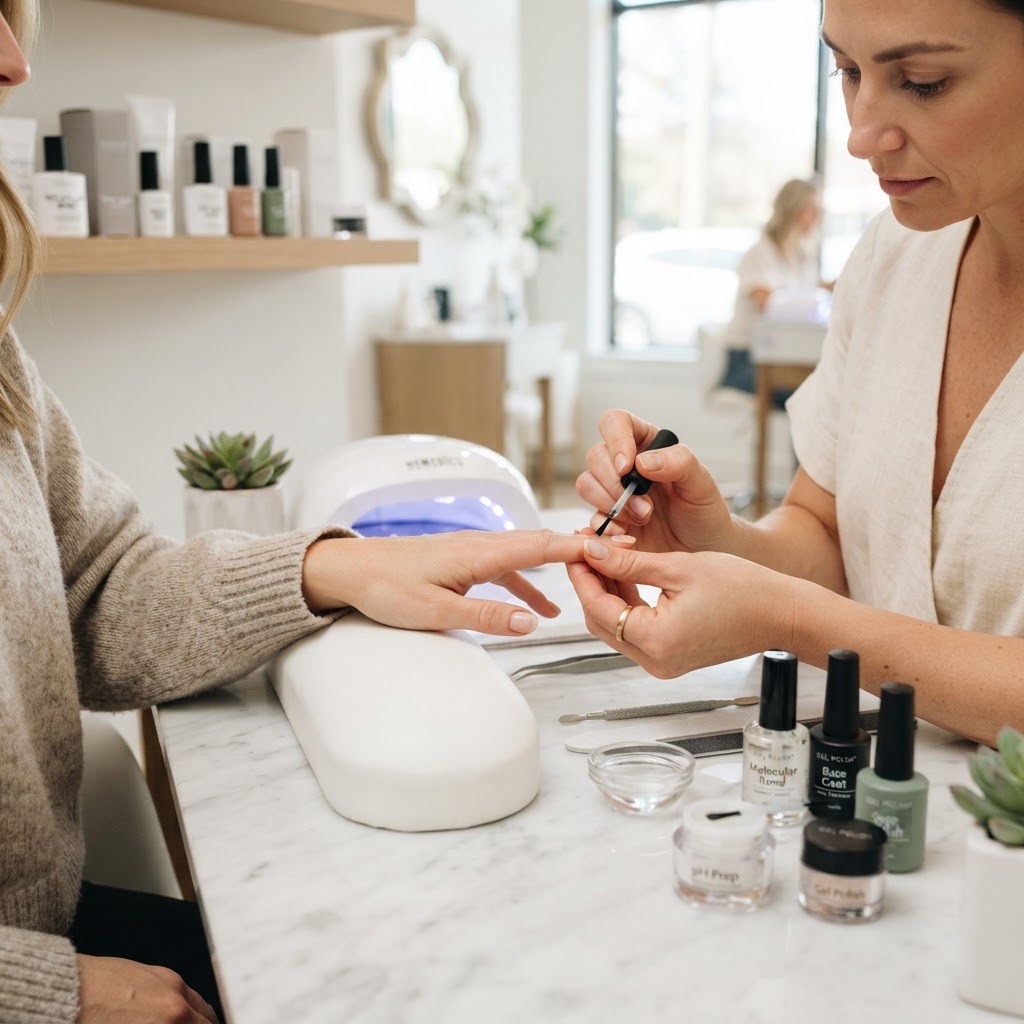
The Hidden Challenge of Hormonal Shifts
Every seasoned nail technician has faced the 'mystery lifter'—that one client whose product peels clean off the nail plate despite flawless preparation and quality materials. Often, the culprit isn't your technique; it's the client's internal physiology. Hormonal shifts—triggered by pregnancy, menopause, thyroid fluctuations, or even high-stress cycles—directly alter the chemical composition of the nail plate, specifically the sebum and moisture levels.
The Science of 'Oily' Nail Plates
When a client's body undergoes hormonal changes, the nail plate can become hyper-hydrophobic or excessively oily. This oiliness acts as a microscopic barrier between the keratin fibers of the nail and your base coat. If your standard prep protocol doesn't account for this shift in surface tension, your product will inevitably shed at the proximal fold or the lateral sidewalls.
The Three-Phase Molecular Adhesion Protocol
To combat product shedding in volatile nail environments, transition your service to this three-phase diagnostic and application workflow:
Join the newsletter
Get fresh nail tutorials, trends, and business tips straight to your inbox.
1. The Dehydration Sweep
Instead of a single alcohol wipe, perform a double-stage dehydration process. First, use a 99% isopropyl alcohol wipe to remove bulk surface oils. Follow this immediately with a dedicated dehydrator containing high concentrations of ethyl acetate. This solvent is critical because it specifically targets the lipids trapped within the upper layers of the nail plate, rather than just cleaning the surface.
2. The 'Micro-Etch' Technique
For clients with chronically oily plates, standard buffering is insufficient. Use a 240-grit file to perform a 'directional etch.' Instead of swirling, file in a single direction from cuticle to free edge. This creates microscopic 'ridges' that act as mechanical anchors. Ensure you are targeting the proximal fold area, as this is where lifting typically initiates due to high oil density.
3. The Primer Selection Shift
Move away from universal acid-free primers for these clients. Switch to a mild acid-based primer (containing methacrylic acid) for the specific perimeter of the nail. Acid-based primers create a chemical bond by slightly etching the surface upon contact, 'locking' the base gel into the keratin fibers. Apply only a thin bead around the edges, avoiding the skin, to prevent chemical irritation.
Monitoring and Feedback Loops
Don't guess; track. If you notice a spike in lifting during a client's specific seasonal or hormonal cycle, document it in your client management software. Create a 'Hormonal Protocol' tag in your database. This allows you to proactively adjust your primer choice or prep time before they even sit in your chair.
When to Re-evaluate
If the Molecular-Adhesion Protocol still results in lifting, it is time to have a professional conversation with your client. In cases of severe systemic hormonal imbalances, the nail plate may be shedding layers (lamellar dystrophy), making it structurally impossible for hard gel or acrylic to adhere. In these instances, recommend a 'maintenance break' or a transition to high-quality breathable polishes until their internal chemistry stabilizes.
By treating the nail plate as a dynamic, reactive surface rather than a static canvas, you position yourself as a technical expert who solves problems others simply label as 'client error.'
Join the newsletter
Get fresh nail tutorials, trends, and business tips straight to your inbox.
