
The 'Molecular-Adhesion' Sequence: Eliminating Mid-Service Lifting via pH-Balancing
Learn the scientific protocol for prepping the nail plate to maximize product longevity and stop lateral lifting in its tracks using precise pH-balancing chemistry.
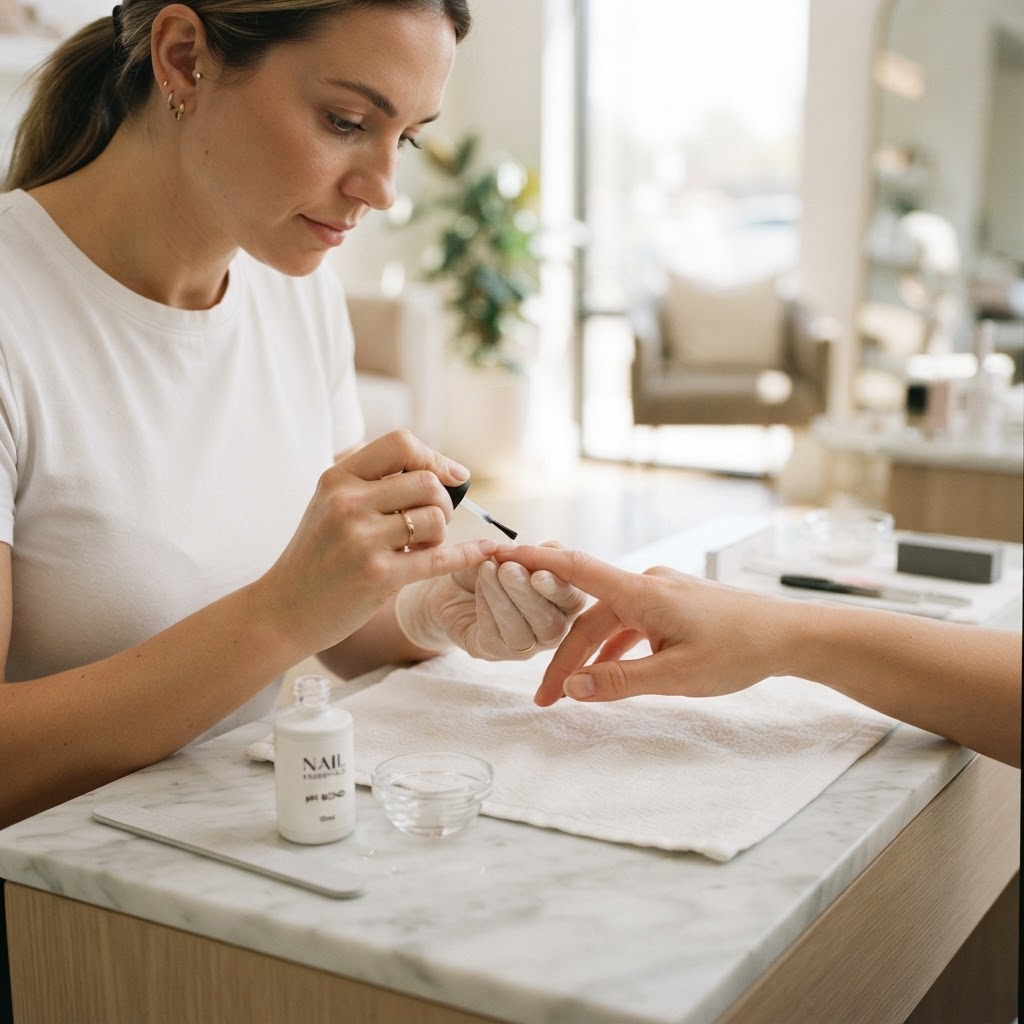
The Hidden Cause of Lifting
Most nail techs view lifting as a failure of the product, but it is almost always a failure of the interface. When gel or acrylic separates from the natural nail, it is rarely because the bond was too weak; it is because the surface environment—the pH level and moisture content—was never truly neutralized. If your clients report 'pop-off' lifting at the cuticle or sidewalls within the first week, you likely have an imbalance in the nail plate's natural chemistry.
The Anatomy of the Nail Plate
The natural nail plate is composed of keratin, which is naturally slightly acidic, typically resting between a pH of 5.0 and 6.0. Most professional-grade base gels are formulated to work best within this range. If you over-prep the nail or use harsh alkaline cleansers, you strip the nail of its natural mantle, raising the pH and creating a surface that repels, rather than accepts, synthetic resins.
The Precision Prepping Protocol
To achieve maximum molecular adhesion, follow this three-step sequence that treats the nail plate as a biological surface rather than just an inert substrate:
Join the newsletter
Get fresh nail tutorials, trends, and business tips straight to your inbox.
1. The Dehydration Phase
Avoid using high-percentage acetone as a dehydrator if you are struggling with adhesion. Acetone can be too aggressive, drawing too much moisture from the deeper layers of the nail plate, which causes the nail to 'shrink' slightly. As it re-hydrates under the product, the nail expands, breaking the molecular seal. Instead, use a specialized, professional-grade dehydrator containing Isopropyl Alcohol and Ethyl Acetate, which targets surface moisture without stripping the structural integrity.
2. The pH-Neutralizing Step
This is the step most techs skip. After etching and dehydrating, apply a pH balancer. This product is formulated to restore the nail’s surface to that ideal 5.5 pH range. When the nail plate's chemistry matches the manufacturer's target, the polymer chains in your base gel can cross-link more efficiently. If you are working on a client with naturally oily nails, the balancer is not optional—it is the bridge between the nail plate and your primer.
3. The Primer Placement (The 'Dot' Method)
Many techs flood the nail with primer, which can lead to chemical etching of the surrounding skin and a breakdown of the bond over time. Instead, use the 'dot' method: apply a tiny drop to the center of the nail and let it distribute itself through capillary action. Only use acid-free primers for long-term health; while acid-based primers provide a 'bite' into the nail, they are frequently the cause of contact dermatitis and long-term nail thinning.
Troubleshooting Lateral Lifting
Lateral lifting—lifting along the sidewalls—is often a result of improper anatomy mapping. If you apply your base layer too close to the eponychium or the lateral folds, you create a reservoir for moisture and oil to collect.
* The 1mm Buffer Zone: Always maintain a strict 1mm gap between your product and the skin.
* The Sidewall Taper: Ensure your apex is distributed correctly. If the product is too thin at the stress points near the sidewalls, the nail will flex under daily impact, causing the rigid product to snap away from the flexible natural nail.
By treating the nail plate like a laboratory environment where pH, moisture, and mechanical stress intersect, you transition from 'applying polish' to 'engineering longevity.' Start implementing this sequence in your next service to see a measurable reduction in client touch-ups.
Join the newsletter
Get fresh nail tutorials, trends, and business tips straight to your inbox.
