
The Inventory-Liquidity Ratio: Managing Salon Capital Through Smart SKU Control
Stop letting your cash flow evaporate into dust-collecting color collections; learn how to calculate and maintain the ideal Inventory-Liquidity Ratio to keep your salon profitable and lean.
The Silent Profit Killer: Over-Stocking in the Nail Industry
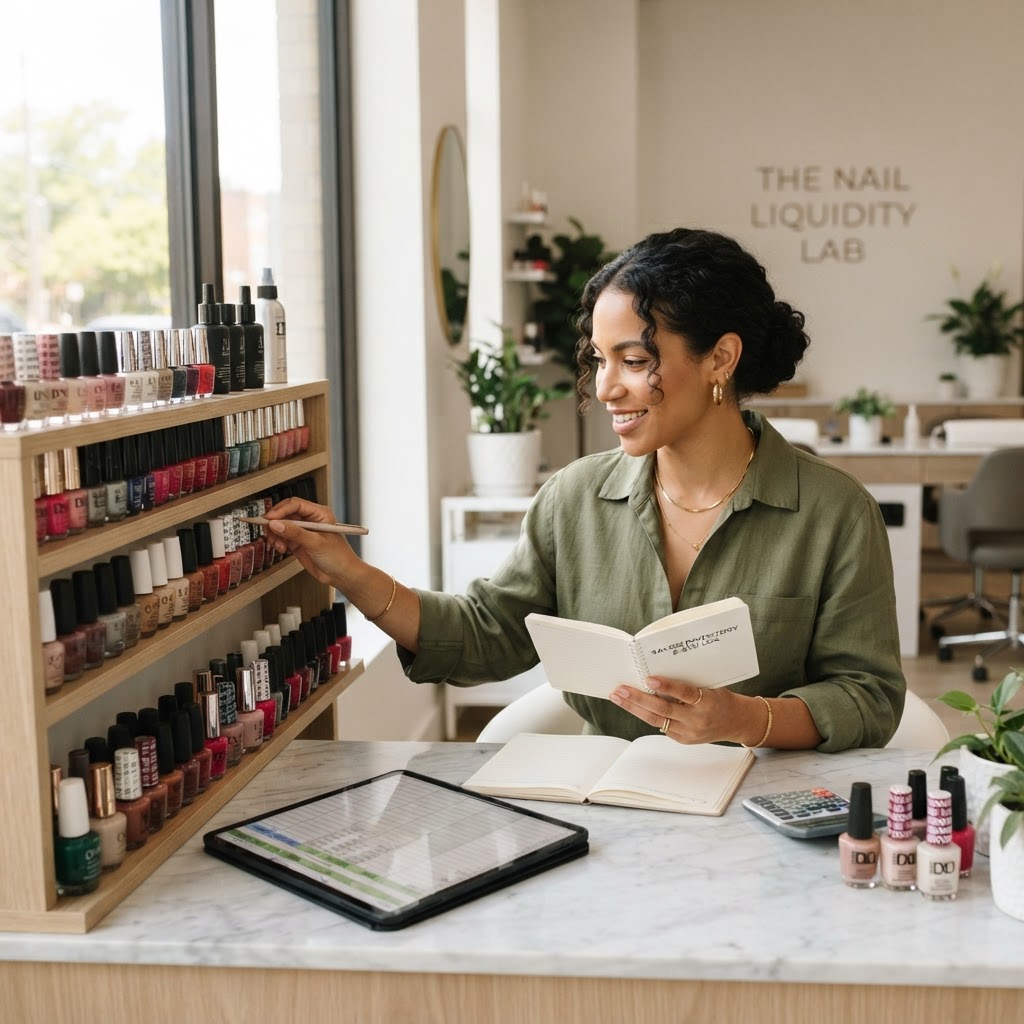
For many nail salon owners, the allure of the 'full color wall' is undeniable. It feels professional, aesthetically pleasing, and safe. However, from a business perspective, a massive, unmanaged inventory is a liability that traps your liquid capital in plastic bottles. When you have five hundred colors but only fifty are being chosen by clients, you are effectively sitting on dead stock that loses value every day through shelf-life degradation.
Calculating Your Inventory-Liquidity Ratio (ILR)
To move from a reactive purchasing model to a strategic one, you must track your ILR. This metric measures the relationship between your total product investment and the actual revenue those products generate over a 90-day window.
* The Formula: (Total Cost of Monthly Product Purchases) / (Net Revenue from Services Utilizing Those Products).
* The Target: Ideally, your product overhead for consumables should hover between 8% and 12% of your service revenue. If you are consistently above 15%, you are likely over-stocking on trending colors that do not provide a return on investment.
The 'Velocity-Sorting' Method for SKU Management
Categorize your entire product library based on 'turnover velocity' to make data-backed purchasing decisions:
Join the newsletter
Get fresh nail tutorials, trends, and business tips straight to your inbox.
Implementing the 'Bottle-Rotation' Audit
Once a quarter, conduct a physical audit of your inventory. If you find colors that have been untouched for two consecutive quarters, perform a 'Liquidity Extraction.' This can take the form of:
* Feature Promotions: Creating a 'Monthly Archive' menu where these specific colors are offered at a slight discount for the month to move the stock.
* Artistry Utilization: Turning slow-moving gels into mixing bases for custom art or palette-work, ensuring every drop is utilized rather than wasted.
Strategic Purchasing vs. Emotional Buying
The biggest trap for salon owners is 'new release fatigue.' When a brand launches a collection of 20 colors, buying the entire set is a business error unless your data shows 80% of those colors align with your clients' established preferences.
* The 20/80 Rule: Identify the 20% of your color collection that accounts for 80% of your services. Use this list as your primary 'anchor' and only purchase new shades that represent a verifiable gap in your current palette (e.g., if you lack a specific sheer nude or a high-pigment cobalt).
Conclusion
Managing your salon inventory isn't just about organizing shelves; it's about protecting your cash flow. By shifting your mindset from 'collecting colors' to 'managing assets,' you create a leaner, more resilient business. Every dollar not sitting on your shelf in the form of an unused bottle of gel is a dollar that can be reinvested into advanced education, better equipment, or marketing initiatives that actually drive new client bookings.
Join the newsletter
Get fresh nail tutorials, trends, and business tips straight to your inbox.