
The 'Dynamic-Fulcrum' Filing Method: Reducing Repetitive Strain in High-Volume Salons
Learn how to recalibrate your ergonomic filing technique to protect your wrists while maintaining razor-sharp structural precision on every extension.
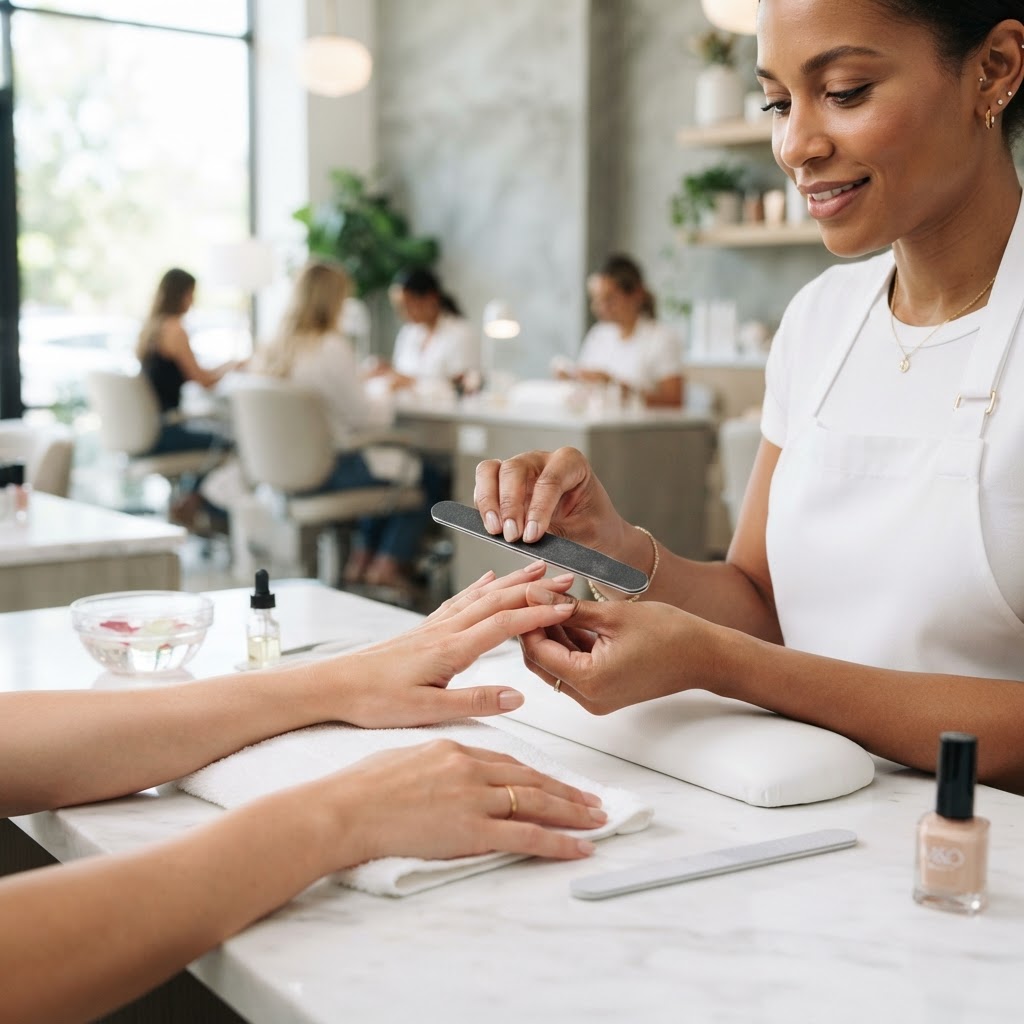
The Silent Career-Ender: Wrist Fatigue
For the professional nail technician, the hands are not just tools; they are your primary capital. Yet, many of us operate under a 'brute force' mindset when it comes to structural refinement. We see the e-file as a power tool rather than an extension of our own anatomy. The 'Dynamic-Fulcrum' method is designed to shift the burden of filing away from your carpal tunnel and onto the mechanical efficiency of your tool and pivot point.
The Anatomy of the Pivot
Most technicians experience strain because they anchor their wrists firmly against the table, using their hand as the primary hinge. This forces the small muscles of the wrist to do the heavy lifting of shaping a high-density builder gel. Instead, you must treat your own elbow as the primary fulcrum.
* The Anchor: Keep your pinky finger anchored on the client’s knuckle or a sturdy surface to maintain stability.
* The Hinge: Move the entire forearm from the elbow rather than flicking the wrist. This uses larger, more resilient muscle groups to perform the shaping process.
* The Glide: Allow the e-file bit to do the work. If you feel the need to apply downward pressure, your bit is likely too dull or the grit is too fine for the product volume you are removing.
Calibrating Your Contact Points
Join the newsletter
Get fresh nail tutorials, trends, and business tips straight to your inbox.
Efficiency is lost when we over-file. To prevent repetitive motion, you need to minimize the number of strokes required to achieve a perfect apex.
The Three-Pass Rule
Instead of indiscriminately buffing the nail surface, divide your filing process into three distinct passes:
The Ergonomic Workflow Audit
Your table setup dictates your posture, which in turn dictates your injury risk. Take a look at your station today and adjust these three variables:
* Elevation: Ensure the client’s hand is at a height that allows your elbows to maintain a 90-degree angle. If you are hunched over, you are increasing the strain on your traps and wrists.
* Lighting: If you are squinting to see the transition between the natural nail and the product, you are subconsciously tightening your grip on the handpiece. Proper shadow-casting lighting is an ergonomic necessity, not a luxury.
* Bit Maintenance: A dull bit is the fastest way to invite RSI (Repetitive Strain Injury). Replace your carbide bits every 6-8 weeks if you are a high-volume artist. The cost of a new bit is significantly lower than the medical cost of tendonitis.
Cultivating Longevity
By adopting the 'Dynamic-Fulcrum' method, you aren't just speeding up your service time—you are extending your career. The goal is to move with intention, relying on gravity and mechanical geometry rather than sheer physical force. When you stop fighting your tools, you gain the focus needed to elevate your artistry.
Join the newsletter
Get fresh nail tutorials, trends, and business tips straight to your inbox.
