
The 'Contact-Surface' Friction Audit: Optimizing Bit-to-Plate Angularity for Reduction of Thermal Friction
Master the precise angles and pressure variables required to eliminate heat spikes and plate thinning during e-file prep. This guide provides a technical breakdown of bit-contact physics to improve your retention rates and reduce client discomfort.
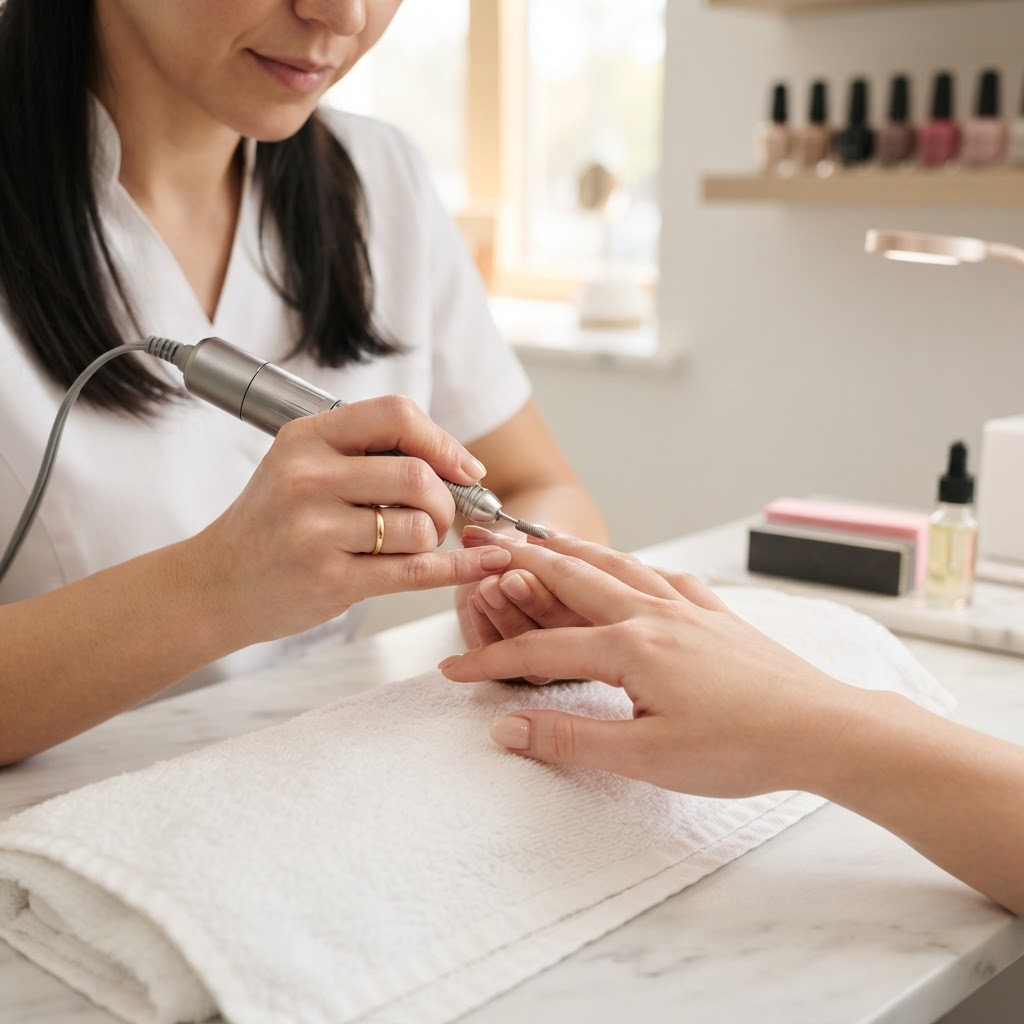
The Physics of Friction in E-File Prep
Many nail technicians blame heat spikes entirely on the motor speed or the grit of the bit. While these factors are critical, the root cause of 'the burn'—and the subsequent micro-damage to the nail plate—is often found in the geometry of the contact surface. When a bit engages with the nail plate at an improper angle, you aren't just filing; you are generating localized heat through mechanical friction that the nail matrix cannot dissipate.
The Angle of Incidence: Why 15 Degrees is the 'Goldilocks' Zone
To achieve professional-grade surface preparation without compromising the plate's integrity, you must maintain a consistent angle of incidence.
* The Zero-Degree Problem: Applying a bit flat against the nail plate creates a massive surface area of friction, leading to rapid heat buildup and 'ring of fire' sensitivity.
* The 15-Degree Sweet Spot: By tilting your handpiece so the bit meets the nail at approximately a 15-degree angle, you transition from a 'grinding' motion to a 'shaving' motion. This reduces the surface area of the bit in contact with the nail, allowing for precise cuticle work and keratin smoothing while minimizing thermal transfer.
The Friction Audit: Evaluating Your Technique
Before you book your next client, perform a self-audit of your current e-file habits. Use these three pillars to recalibrate your approach:
Join the newsletter
Get fresh nail tutorials, trends, and business tips straight to your inbox.
1. Pressure-Velocity Correlation
There is an inverse relationship between speed and pressure. If you are working at high RPMs, your pressure must be near-zero. Many techs apply firm pressure at high speeds to 'save time,' but this forces the bit to carve channels into the nail plate rather than buffing away non-living tissue. If your client pulls away, you have likely violated the friction threshold. Your goal is to move the bit constantly; static contact is the enemy of cool, efficient prep.
2. The 'Sweep-and-Lift' Motion
Instead of a continuous, focused grind, adopt a rhythmic sweep-and-lift motion. By pulsing the contact of the bit, you allow the nail plate a millisecond to air-cool between strokes. This prevents the heat from accumulating in the deeper keratin layers, which is crucial for maintaining the adhesion integrity of your gel base coats.
3. Bit-Grit Selection Based on Porosity
Not all nail plates are created equal. You must perform a visual assessment of the client's substrate:
Long-Term Benefits of Controlled Friction
Mastering these technical nuances does more than keep your clients comfortable. It directly impacts your bottom line through:
* Increased Retention: By not 'sanding' the nail plate down to the red, sensitive layers, you maintain the plate's natural oils and structural integrity, creating a superior foundation for product adhesion.
* Reduced Liability: You eliminate the risk of the 'ring of fire,' which is the number one cause of client attrition in professional nail services.
* Bit Longevity: When you stop forcing a bit into the nail, your bits stay sharper for longer, saving you significant operational costs in the long run.
Conclusion
Technical artistry isn't just about the finished design; it's about the invisible, foundational work that happens at the cuticle. By auditing your contact angles and embracing the 15-degree rule, you elevate your service from 'service provider' to 'nail technician,' ensuring the longevity of your clients' nails and the reputation of your business.
Join the newsletter
Get fresh nail tutorials, trends, and business tips straight to your inbox.