
The 'Contact-Surface' Calibration: Engineering Product Adhesion for Oily Nail Plates
Learn the precise chemical and physical protocols to eliminate lifting on hyper-hydrated or oily nail beds by mastering surface-tension control.
The Oily Nail Paradox
Every nail technician has encountered the 'chronic lifter'—the client whose gel or acrylic extensions detach within 72 hours despite your best application techniques. More often than not, the culprit is the natural chemistry of the nail plate. Hyper-hydrated or naturally oily nail plates create a slippery surface-tension barrier that prevents base coats from achieving a covalent bond. To solve this, you must move beyond basic prep and implement a 'Contact-Surface' calibration protocol.
Phase 1: Solvent-Based Dehydration
Standard rubbing alcohol is insufficient for clients with naturally high sebum production. Your goal is to temporarily draw moisture and oils out of the upper layers of the nail plate without inducing 'over-processing,' which creates brittleness.
The Protocol
Phase 2: Mechanical Micro-Texture
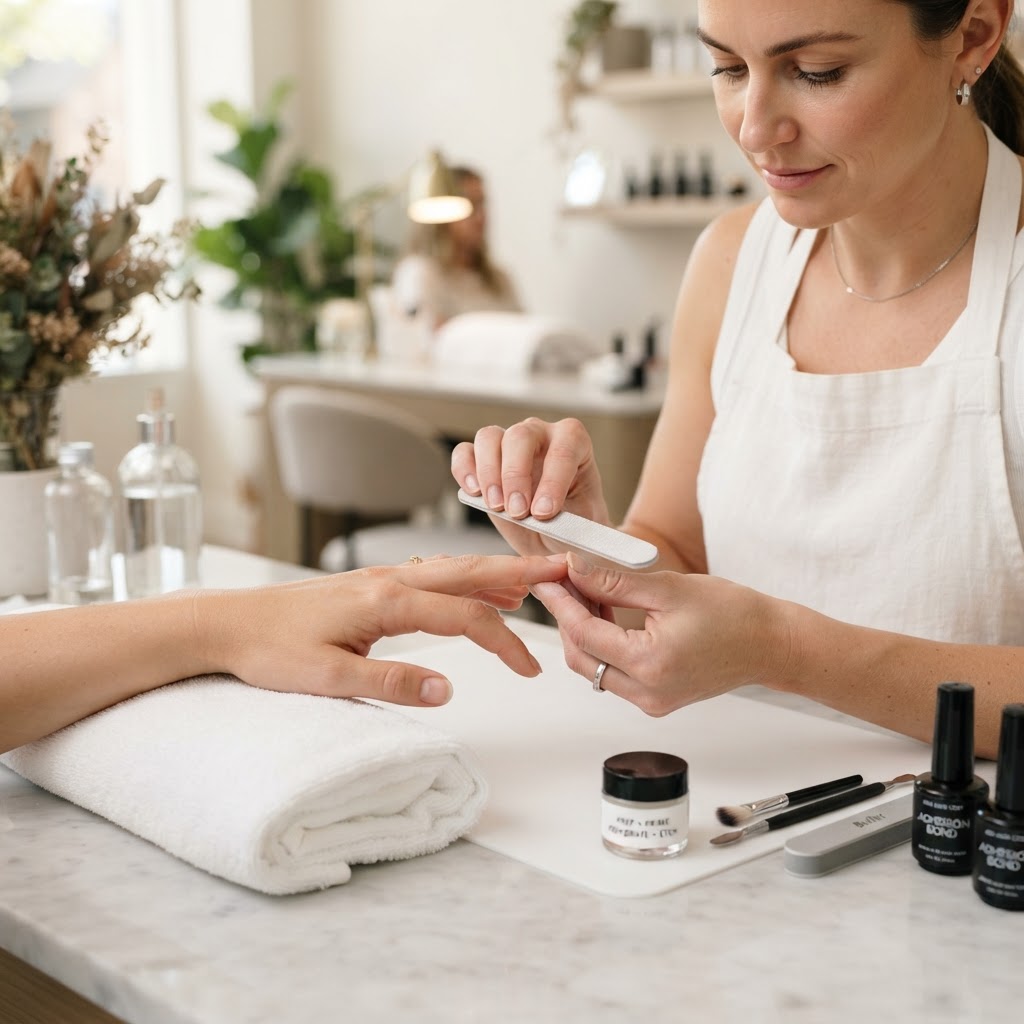
Adhesion is a combination of chemical bonding and mechanical interlocking. If the surface is too smooth, the product has no 'anchor' points. Use a 180-grit file, but apply it with a 'cross-hatch' motion.
Join the newsletter
Get fresh nail tutorials, trends, and business tips straight to your inbox.
* Lateral Strokes: Move from left to right across the nail.
* Vertical Strokes: Move from base to free edge.
* The Goal: You are not thinning the nail plate; you are creating a microscopic mountain-and-valley topography that increases the surface area for the base coat to inhabit.
Phase 3: Acid-Free Primer Synergy
Many technicians make the mistake of flooding the nail with primer. In the case of oily nails, 'less is more.' Acid-free primers are essentially double-sided tape; they contain monomers that remain sticky once cured or air-dried, bridging the gap between the natural plate and the gel.
Application Rules
* Apply primer only to the areas where you have created the micro-texture.
* Do not touch the skin; primer contact with the eponychium can lead to long-term contact dermatitis.
* Wait for the primer to become 'tacky'—it should not look wet or pooled. If it pools, the product is too thick, and it will eventually become a slip-plane for your gel to slide off.
Troubleshooting: The 'Seal-Edge' Technique
Even with perfect prep, the 'sealing' of the free edge is often ignored. On oily nails, the natural tendency of the nail to flex causes the free edge to act like a lever, prying the product upward.
* When applying your base layer, drag your brush horizontally across the very tip of the natural nail to coat the distal edge.
* Ensure this edge is capped with every single layer (base, color, and top) to create a 'wraparound' effect that prevents moisture from getting under the product.
Summary for Success
Stop blaming the product and start managing the substrate. By calibrating your dehydration intensity, optimizing your surface texture, and applying primer with surgical precision, you can turn your most difficult 'lifters' into long-term clients. Consistent adherence to this contact-surface protocol ensures that your chemical bond is stronger than the daily stresses the client puts on their nails.
Join the newsletter
Get fresh nail tutorials, trends, and business tips straight to your inbox.
