
The 'Cancellation-Buffer' Protocol: Mitigating Revenue Erosion Through Predictive Scheduling
Learn how to calculate your individual service-time variance to implement a data-driven booking strategy that protects your hourly rate from the impact of last-minute cancellations.
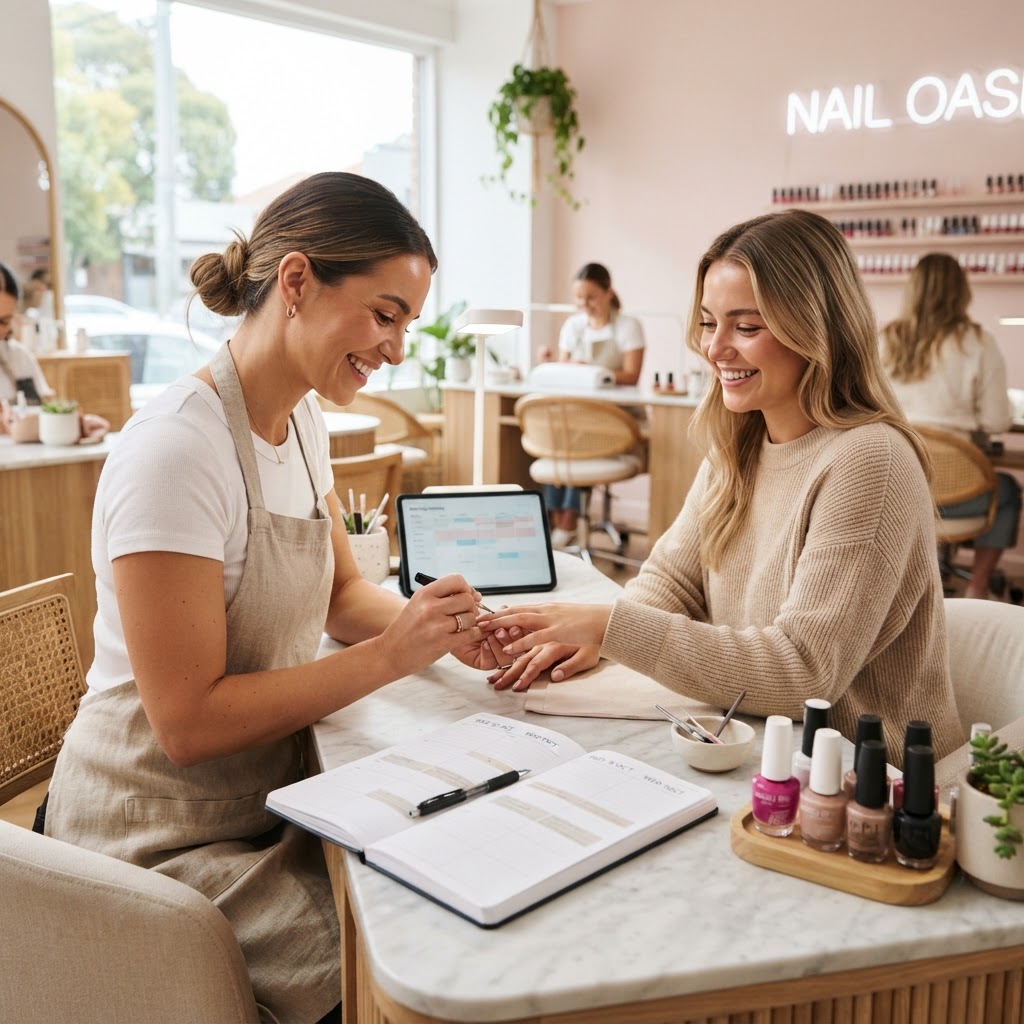
The Hidden Cost of the Empty Chair
For the independent nail artist or small salon owner, a last-minute cancellation isn't just a lost appointment; it is a permanent loss of revenue that cannot be recovered. Traditional 'flat' booking systems fail because they treat every hour as equal. In reality, your business faces variable risk based on service complexity, client history, and the time of day. The 'Cancellation-Buffer' Protocol shifts your management style from reactive to predictive.
Step 1: Mapping Your Variance
Before you can protect your revenue, you must quantify your exposure. Audit your last six months of appointment data. Identify the three most common 'leak' points:
* Service Complexity Correlation: Do longer, high-ticket services (like full structured gel sets) experience higher cancellation rates than quick express manicures?
* The Lead-Time Gap: Are cancellations occurring within 24 hours, or are they clustered in the 48-72 hour window?
* Recurring Offender Analysis: Categorize clients based on their 'reschedule-to-show' ratio.
Step 2: The Tiered Booking Buffer
Join the newsletter
Get fresh nail tutorials, trends, and business tips straight to your inbox.
Once you have your data, stop offering a one-size-fits-all scheduling policy. Instead, implement a tiered approach:
High-Risk/High-Value Scheduling
For services exceeding two hours, require a non-refundable booking deposit or a card-on-file authorization that explicitly outlines a sliding-scale penalty. When these slots open up, move them to a 'Waitlist-Only' status. Prioritize filling these spots with your 'Gold-Tier' clients—those with a 100% attendance rate over the last year.
The 'Floating' Gap Strategy
Instead of stacking appointments back-to-back, incorporate a 'buffer block' every four hours. If your schedule remains intact, use this block for content creation, inventory management, or equipment maintenance. If a cancellation occurs, you have effectively 'recovered' your time by pivoting to non-client revenue-generating tasks, rather than sitting in a state of financial loss.
Step 3: Predictive Communication
Automation is your greatest defense against human error. Your booking software should trigger a 'reconfirmation sequence' that forces a physical response from the client:
Managing the Economic Impact
If you find that a specific service (e.g., extensive nail art) has a high cancellation rate, you are likely underpricing the *preparation* required for that service. If you spend 30 minutes prepping colors and templates for a client who cancels, you haven't just lost the service fee—you have lost the labor hours. Incorporate a 'Design Prep Fee' into your pricing structure for complex art. This makes the appointment a commitment to a finished product, not just a time slot on your calendar.
By treating your schedule as an asset requiring active risk management, you stabilize your monthly income and reduce the professional burnout associated with constant rescheduling friction. Focus on your data, automate your touchpoints, and prioritize your high-reliability clients to build a sustainable, resilient salon business.
Join the newsletter
Get fresh nail tutorials, trends, and business tips straight to your inbox.