
How to Price Your Nail Services (Without Undercharging)
Most nail techs undercharge — sometimes by 30% or more. This guide breaks down exactly how to calculate your real prices, when to raise them, and how to communicate your value to clients.
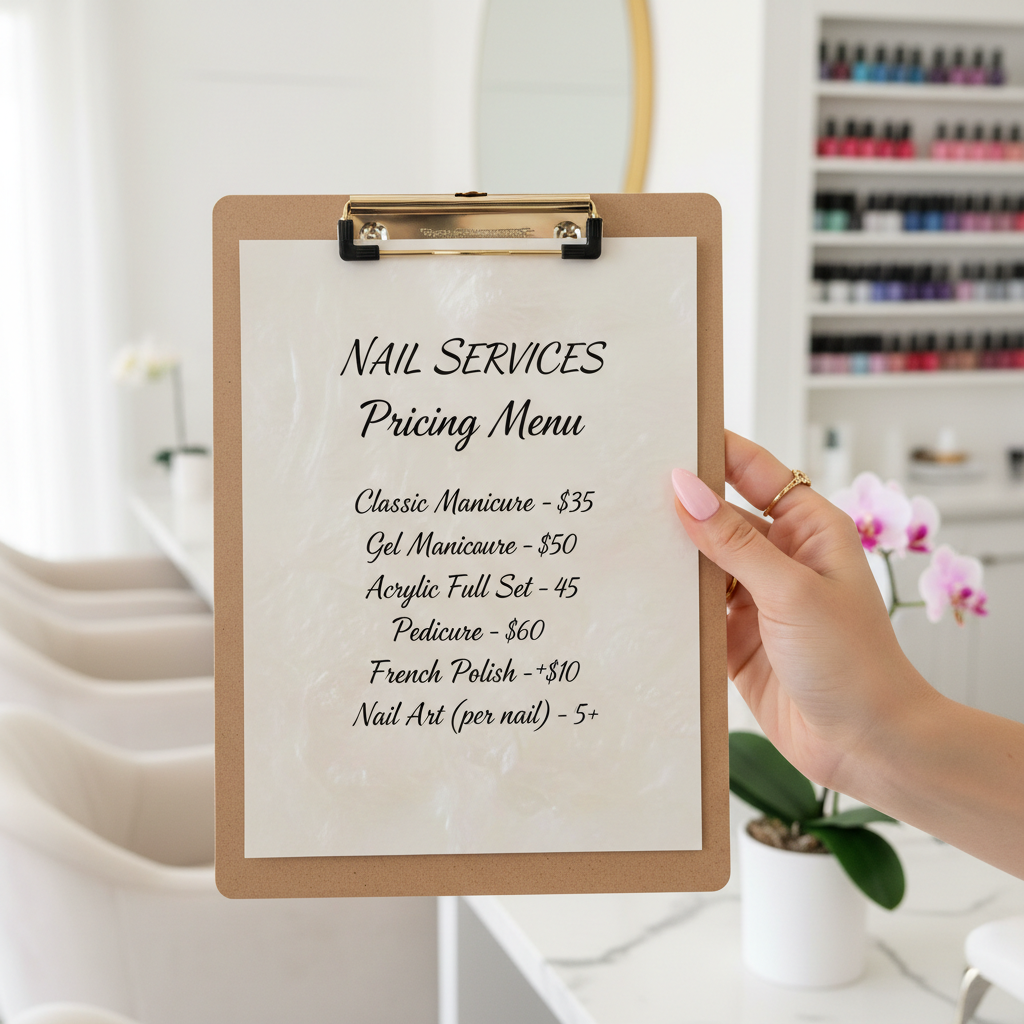
The Undercharging Epidemic in the Nail Industry
It's one of the most consistent patterns across nail tech communities: talented professionals charging prices that don't cover their real costs, let alone reward their skill and time.
If you've ever looked at your schedule at the end of a full day and wondered why your bank account doesn't reflect how hard you worked — this article is for you.
Step 1: Know Your Real Costs
Before you can set a profitable price, you need to know what it actually costs you to perform each service. Most nail techs underestimate this.
Direct costs per service:
Overhead per hour:
Your time:
Add it all up. That's your floor — the absolute minimum you need to charge to break even. Your actual price should be above this.
Step 2: Know Your Market (But Don't Be Controlled By It)
Yes, it's useful to know what other nail techs in your area charge. But too many nail techs use the local average as their ceiling, when it should only be a data point.
If you have specialized skills — advanced nail art, extensions, competition-level techniques — you should be charging premium rates regardless of what the salon down the street charges.
Specialization is your pricing power. A chrome nail specialist, a 3D embellishment artist, or a nail tech known for flawless competition-style sets is not competing with a budget nail bar. Price accordingly.
Join the newsletter
Get fresh nail tutorials, trends, and business tips straight to your inbox.
Step 3: Factor in Your Experience Level
Pricing should increase as your skills develop. A common framework:
If you have a waitlist, that is direct evidence that you are undercharging. The market is telling you to raise prices.
Step 4: Build a Service Menu With Tiered Pricing
Not all services are equal in time, skill, or materials. Your menu should reflect that.
Example tiered structure:
Itemizing your menu helps clients understand what they're paying for and prevents you from absorbing costs you should be charging.
Step 5: Communicate Your Value
Pricing confidence comes from having visible proof of your skill. This is where your content presence matters.
Nail techs who post their work regularly on NailRush Live build a portfolio that justifies premium pricing before a client even books. When a potential client sees 50 examples of your work — including your specialty techniques — the price conversation is much easier.
Build your NailRush portfolio →
When and How to Raise Prices
Signs you should raise your prices:
How to raise prices:
The Long Game
The nail techs earning $80K+ per year aren't necessarily the most skilled — they're the ones who built a strong content presence, specialized in something, priced their services correctly, and created multiple revenue streams (services + digital products + subscriptions).
NailRush is built to support every part of that model.
Join the newsletter
Get fresh nail tutorials, trends, and business tips straight to your inbox.
